
 :
:
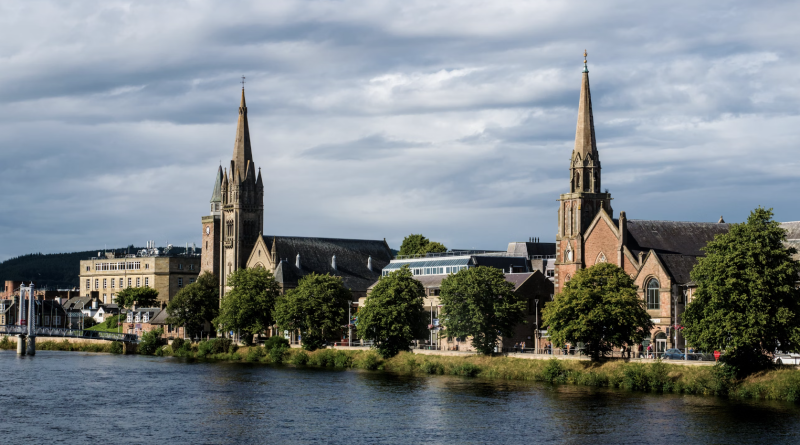
Scotland: A new independent analysis from Scottish consultancy BiGGAR Economics has revealed the considerable economic impact of Scotland’s short-term let [STL] industry, particularly in the Highland region, and which was also shown to have a negligible effect on housing.
The Association of Scotland’s Self-Caterers [ASSC] commissioned BiGGAR Economics to assess the economic impact generated by STLs across Scotland. The independent analysis builds on the consultancy’s previous work on the impact of the STL sector on Edinburgh’s economy.
BiGGAR Economics calculated that STLs contribute nearly £1 billion gross value added [GVA] to the Scottish economy overall, while supporting approximately 30,000 jobs. The Highlands makes up the largest proportion of the total Scottish impact, with the sector generating £200 million GVA and supporting nearly 7,000 jobs.
By accommodating visitors, STLs generate economic activity across the Highlands, with the local impacts exceeding residential use, supporting an additional £32,400 GVA per property. Guests staying in STLs also spend more than the average visitor, with knock-on gains for related tourist and hospitality businesses.
Alongside the economic boost, the researchers also highlighted that self-catering accommodation accounts for less than one per cent of the country’s total housing stock, too low a proportion to have a meaningful impact on local housing markets. According to the report, in every local authority area, including Highland, economically inactive empty homes account for a larger proportion of total dwellings than those of secondary lets.
The key headlines include:
- STLs in Scotland are estimated to generate £864 million GVA and support 29,324 jobs;
- The Highlands account for nearly a quarter [23.1 per cent] of the total economic impact, a higher proportion than Edinburgh;
- STLs in the Highlands produce £199.9 million GVA, supporting 6,786 jobs;
- The annual GVA associated with an average owner-occupier / private rented household in the Highlands was £12,829 compared to £45,118 for a two-bedroom STL;
- STLs account for a small proportion of Scotland’s housing stock, with secondary lets accounting for just 0.8 per cent. This is considerably less than the 3.6 per cent that empty properties account for;
- The number of empty homes and second homes in the Highlands as a percentage of total dwellings is much higher than that associated with secondary lets.
According to the ASSC, the fact that Highland STLs had a greater economic impact in 2023 than Edinburgh may have been influenced by Edinburgh Council’s “draconian” STL regulations. The paper itself suggests that “a reduction in the supply of short-term lets in Edinburgh has reduced the city’s contribution to the overall benefits they bring to Scotland’s economy”.
The study comes as local authorities like The Highland Council consider their short-term let regulations and as the Scottish Government has published an implementation update report which the industry maintains did not adequately address its longstanding concerns.
BiGGAR’s new analysis is based on the best available evidence on STLs in Scotland. The findings have been shared with Scottish Government ministers and officials, as well as The Highland Council.
Graeme Blackett, director of BiGGAR Economics, said: “This report shows that secondary lets make an important contribution to Scottish tourism and economy overall, supporting almost 30,000 Scottish jobs. Our research also concluded that it was clear that secondary lets are not a driver of the wider Scottish housing market.
“If short-term let regulations leads to a reduction in the supply of secondary lets, that will have a negative impact on the tourism economy, without delivering any solutions to Scotland’s wider housing challenges,” he added.
Fiona Campbell, CEO of the Association of Scotland’s Self-Caterers [ASSC], said: “This is yet more compelling evidence that short-term lets aren’t the main contributor to the housing crisis but are instead turbocharging local economies across Scotland. The impact of STLs in the Highlands is extremely impressive, overtaking that of the capital, providing a £200m windfall and supporting thousands of jobs.
“However, all of this is at risk from heavy-handed regulation. Local authorities, including Highland Council, should take heed of the report’s findings when considering their approach to planning policies and control areas to ensure the relatively small number of valuable short-term lets are protected.
“For policymakers, the message couldn’t be clearer: you can’t solve a housing crisis by producing a crisis in Scottish tourism by decimating local businesses that underpin local economies. Attention must shift to the real causes of the housing crisis,” she added.
Meanwhile, the ASSC has also formally responded to the City of Edinburgh Council’s consultation on a proposed visitor levy, which would become the first tourist tax in Scotland to be implemented. A ‘transient visitor levy’ was approved by Edinburgh‘s city council in August, which would charge short-term rental, hotel, bed-and-breakfast [BnB] and hostel guests a tax of five per cent per room night from 2026.
The capital city’s visitor levy is estimated to raise up to £50 million a year, although £5 million of that is set to be allocated to borrowing a further £70 million to build new affordable homes to address Edinburgh’s housing crisis. Remaining funds would be spent on city infrastructure and operations, including street cleaning, improved lighting and pedestrianisation, as well as on the local arts and culture sector and tourism marketing.
Some business leaders claim that the visitor levy will not only make Edinburgh less competitive but that the allocation of funds to building new homes is contrary to the original purpose of the levy that was set out in legislation.
The ASSC said: “While acknowledging the council’s intent and legislative authority to introduce such a levy, the ASSC maintains its longstanding opposition due to concerns about its potential impact on the tourism and hospitality sectors. If the levy proceeds, it must be managed carefully to minimise harm and maximise benefits for tourism, local businesses, and the wider community.”
Founded in 1978, the ASSC represents over 1,700 members, operating self-catering properties throughout Scotland, from city centre apartments to rural cottages, to lodges, chalets and castles.